When a home suddenly goes cold in the dead of winter, the immediate goal is to restore warmth as quickly as possible. For professional heating system repair specialists, the diagnostic process is a methodical race against the clock to identify which critical safety or mechanical component has failed. While some furnace issues are complex, many sudden outages are caused by standard wear and tear that experts can quickly pinpoint and resolve.
The Thermostat’s Power and Calibration
It may seem basic, but the first thing a technician checks is the command center of your HVAC system. A thermostat with dead batteries or a slipped calibration can prevent the furnace from receiving the “call for heat” signal. Specialists verify that the unit is set to the “heat” mode and that the setpoint is actually higher than the current room temperature. In modern smart homes, they also look for software glitches or “vacation mode” settings that might be overriding your manual controls.
Air Filter Obstruction and Airflow
A clogged air filter is the most common culprit behind a furnace that shuts off shortly after starting. When a filter is caked with dust and pet dander, it restricts the volume of air flowing over the heat exchanger. This causes the internal temperature of the furnace to skyrocket, triggering the “high limit switch,” a safety device that kills the burners to prevent a fire.
Flame Sensor Contamination
If your furnace ignites for a few seconds and then shuts down, the problem is often a dirty flame sensor. This small, metallic rod is designed to detect the presence of a flame; if it is covered in carbon buildup (soot), it cannot “see” the fire. As a safety measure, the system assumes the gas hasn’t lit and shuts off the gas valve to prevent a dangerous buildup of unburned fuel in your home.
Electronic Ignitor or Pilot Health
Whether you have an older system with a standing pilot light or a modern furnace with a hot surface ignitor (HSI), this component is the “match” that starts the combustion. Ignitors are under intense thermal stress and eventually crack or burn out, much like a lightbulb filament. For residents needing Avon heating repair, checking the resistance of these ignitors is a standard diagnostic step that often reveals the root cause of a no-heat call.
Pressure Switch and Inducer Fan Operation
Before the burners ever light, a small fan called the “draft inducer” must spin up to clear the combustion chamber of any residual gases and ensure proper venting. A pressure switch monitors this process. If a bird’s nest or snow blocks the venting pipe, or if the inducer motor is failing, the pressure switch will stay open, and the furnace will never advance to the ignition stage.
See also: Keeping Your Home Safe: Modern Pest Control Solutions in Chelmsford
Blower Motor and Capacitor Status
Sometimes the furnace “fires up” (you hear the flame), but no warm air comes out of your registers. In this scenario, heating system repair specialists focus on the blower motor. They check the motor for seized bearings or a failed start capacitor. The capacitor is a small cylindrical device that provides the electrical “jolt” needed to get the heavy blower fan spinning; without it, the motor may simply hum and eventually overheat.
Gas Valve and Supply Integrity
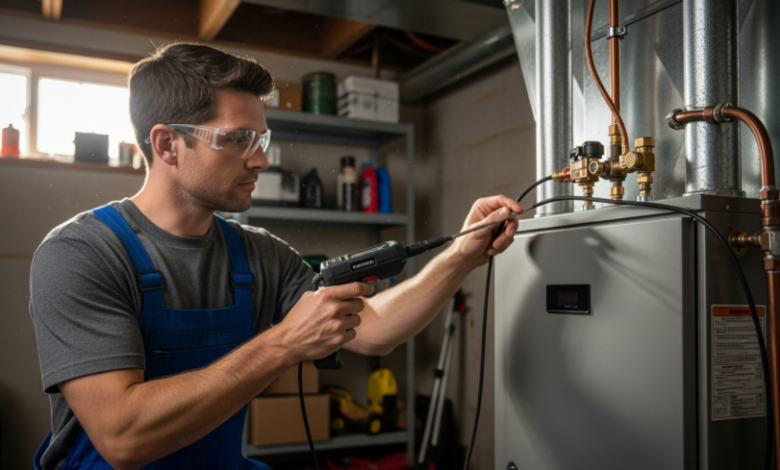
Finally, the specialist ensures that fuel is actually reaching the unit. This involves checking the manual shut-off valve on the gas line and the electronic gas valve inside the furnace. They use a manometer to measure gas pressure, ensuring it is within the manufacturer’s specified range for safe and efficient combustion.
Final Thoughts
A furnace failure is rarely a random event; it is usually the result of a safety sensor doing exactly what it was designed to do, protecting your family from fire or carbon monoxide. Understanding these seven common failure points can help you describe the problem more accurately to a technician, leading to a faster and more efficient repair.