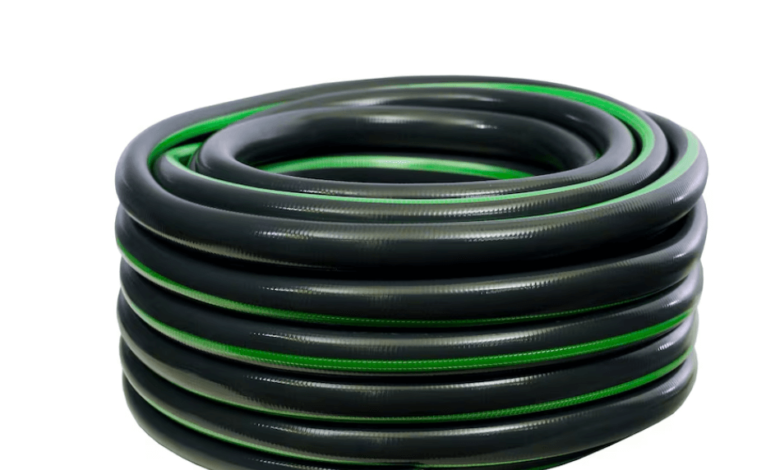
One wrong decision and you’re dealing with leaks, contamination, or worse, a complete system failure. The question isn’t whether you need a quality hose. It’s about picking the right material for your specific application.
Rubber hoses have been the standard for decades. They’re familiar, readily available, and work fine for many applications. But when temperatures climb, chemicals get aggressive, or contamination becomes a concern, rubber starts showing its limits. That’s where Teflon hoses step in.
Let’s break down when Teflon (PTFE) makes sense and when rubber is perfectly adequate.
Temperature Extremes Tell the Story
Rubber hoses typically handle temperatures up to 100°C, maybe 120°C if you’re pushing it.
Teflon hoses? They operate comfortably from -70°C to 260°C. Some specialised versions go even higher.
Think about steam applications or hot chemical transfers. Rubber degrades fast under sustained heat. The material breaks down, cracks appear, and before you know it, you’re replacing hoses far more often than budgeted.
Teflon doesn’t flinch at these temperatures. The molecular structure of PTFE remains stable across extreme ranges. No degradation. No brittleness in freezing conditions either.
If your process involves temperature swings or sustained high heat, rubber simply can’t compete.
Chemical Resistance Matters More Than You Think
Here’s where things get serious.
Rubber reacts with many chemicals. Acids, solvents, aggressive cleaning agents: they all take a toll. The hose swells, softens, or hardens depending on the chemical. Performance drops. Lifespan shortens dramatically.
Teflon is chemically inert. Almost nothing reacts with PTFE. Strong acids, caustic alkalis, organic solvents: Teflon handles them all without breaking a sweat.
For pharmaceutical manufacturing, food processing, or chemical plants, this isn’t just convenient. It’s essential. You can’t risk chemical reactions between your transfer medium and the hose material. Cross-contamination or product degradation isn’t acceptable.
Perhaps you’re transferring aggressive cleaning solutions through the same lines that handle the product. Rubber hoses would need constant replacement. Teflon hoses keep working, cycle after cycle.
The Contamination Question
Food and pharmaceutical industries face strict purity requirements.
Rubber hoses can leach particles, absorb flavours, or harbour bacteria in microscopic cracks. Even FDA-approved rubber has limitations. Cleaning helps, but the rubber’s porous nature makes complete sterilisation difficult.
Teflon offers a non-stick, non-porous surface. Nothing adheres to it. Nothing leaks from it. Steam sterilisation or chemical cleaning methods work perfectly because the smooth PTFE surface doesn’t give contaminants anywhere to hide.
When product purity determines your reputation (or regulatory compliance), Teflon eliminates worries that rubber can’t fully address. Clean-in-place systems work better. Validation becomes simpler. Batch-to-batch consistency improves.
Pressure Ratings and Flexibility
Rubber hoses excel at flexibility. They bend easily, handle vibration well, and forgive rough installation.
Teflon hoses are stiffer. The needs external reinforcement, usually stainless steel braid, to handle pressure. This makes them less flexible than rubber equivalents.
But here’s the trade-off worth considering.
While rubber offers easier routing, it loses pressure capacity faster as temperatures rise. Hot rubber weakens. Teflon maintains its pressure rating across its entire temperature range.
For high-pressure applications above 150 bar, especially at elevated temperatures, Teflon provides reliability that rubber can’t match. Yes, you’ll spend more time planning the installation route. But once installed, performance stays consistent.
Vibration and flexing cycles do favour rubber. If your application involves constant movement or tight-radius bends, rubber makes more sense. Stationary installations with occasional movement? Teflon handles it fine.
Service Life and Total Cost
Let’s talk about something procurement teams care about deeply.
Rubber hoses cost less upfront. No question. The initial purchase order looks attractive.
But how often are you replacing them?
Rubber degrades from heat, chemicals, UV exposure, and ozone. Depending on conditions, replacement might be needed annually or even more frequently. Each replacement means downtime, labour costs, and disposal expenses.
Teflon hoses cost more initially. Sometimes two to three times more than rubber equivalents. But they last longer, often five to ten years in demanding applications where rubber would need multiple replacements.
Calculate the total cost of ownership, not just the purchase price. Include downtime costs, labour for changeouts, and disposal. Suddenly, Teflon doesn’t look expensive. It looks like the sensible long-term choice.
This becomes especially clear in hard-to-reach installations. Replacing a hose that requires scaffolding, permits, and production shutdown isn’t cheap. Pay more once for Teflon, or pay repeatedly for rubber access and replacement.
When Rubber Still Makes Perfect Sense
Teflon isn’t always the answer.
For ambient temperature water transfer, compressed air at moderate temperatures, or general-purpose applications without chemical exposure, rubber works perfectly fine. Why pay extra for capabilities you don’t need?
Rubber also wins for applications requiring extreme flexibility, tight bending radii, or constant flexing. Pneumatic tools, some mobile equipment, and applications with severe vibration favour rubber’s natural flexibility.
Budget constraints matter too. If capital is limited and operating conditions fall within the rubber’s capabilities, there’s no shame in choosing the economical option. Just be honest about the application requirements.
Making the Right Choice
Start by asking the right questions.
What’s your operating temperature range? What chemicals will contact the hose? How critical is contamination prevention? What are the pressure requirements? How often can you afford downtime for replacement?
Answer these honestly, and the choice becomes clearer.
For chemical processing, pharmaceutical manufacturing, food production, high-temperature steam, or any application where purity and longevity matter most, Teflon hoses deliver performance that justifies the investment.
For general industrial applications with moderate conditions, standard transfer duties, or budget-sensitive projects where rubber’s limitations won’t cause problems, stick with rubber.
The worst choice is picking based solely on initial cost without considering what failure costs your operation.
Wrapping Up
Rubber and Teflon hoses both have their place.
Rubber offers flexibility, lower cost, and perfectly adequate performance for many applications. Teflon provides superior chemical resistance, temperature capability, and longevity for demanding environments.
Your operating conditions should drive the decision, not habit or initial price tags. Match the material to the application. Factor in total ownership costs, not just purchase orders.
When temperatures soar, chemicals get aggressive, or contamination risks are high, Teflon hoses eliminate worries that keep operations managers awake at night. When conditions are milder and budgets are tight, quality rubber hoses do the job reliably.
Know your requirements. Choose accordingly. Your operation’s reliability depends on it.