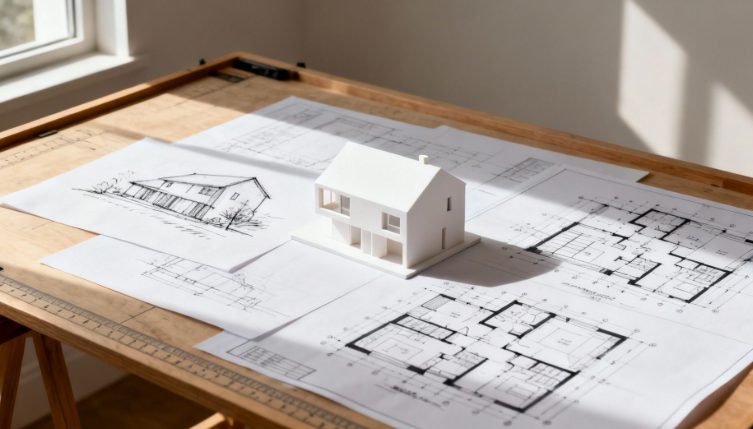
Building a new house is a complex undertaking involving numerous decisions about the building plot, layout, architectural style, construction methods, budget and technical requirements. Many homeowners begin by looking at house plans or collecting inspiration photographs before contacting an architect. While this can be a useful starting point, involving an architect early can make a significant difference to the final result.
An architect does more than draw floor plans or create attractive exterior visualisations. Their role is to understand the relationship between the site, the building, its future occupants and the available budget. The earlier this expertise is introduced, the more opportunities there are to create a successful design.
1. Understand the Potential of Your Building Plot
One of the first things an architect can help with is evaluating the building plot. The shape, orientation, topography and surroundings of a site can influence almost every aspect of a house design.
For example, a plot with attractive views to the west may benefit from living spaces and larger windows facing that direction. However, this orientation may also create overheating problems during summer afternoons.
Other factors worth considering include:
– The position of neighbouring buildings.
– Access roads and driveway requirements.
– Existing trees and vegetation.
– Slope and ground levels.
– Sunlight and prevailing winds.
– Local planning restrictions and building regulations.
An architect can identify opportunities and limitations before you commit to a particular layout or building form.
2. Develop a Better Floor Plan
Many homeowners start with a list of rooms they want in their future home. However, the quality of a house depends not only on how many rooms it contains but also on how those spaces relate to one another.
An architect can help establish an efficient layout based on your lifestyle. This includes considering circulation, privacy, natural light, storage and the relationship between shared and private areas.
For instance, placing the kitchen, dining area and living room together can create a welcoming family environment. At the same time, bedrooms may benefit from separation from noisy living spaces.
Early design discussions help explore these possibilities before the layout becomes too developed to change easily.
3. Avoid Expensive Design Changes Later
One of the biggest advantages of involving an architect early is the opportunity to identify problems before they become expensive.
Changing the position of a bedroom during the concept stage is relatively straightforward. Moving structural walls, bathrooms or staircases after technical drawings have been completed can require substantial redesign work.
The same applies to decisions about building size, roof geometry, window proportions and structural systems.
A well-organised design process develops the main decisions in a logical order, reducing the likelihood of significant changes during construction.
4. Keep Architectural Design Within Your Budget
Budget considerations should influence the design from the beginning rather than being addressed only after the drawings are complete.
The shape and complexity of a building can have a considerable impact on construction costs. A simple rectangular house with a straightforward roof may be more economical to build than a design with numerous projections, complicated roof intersections and extensive structural cantilevers.
This does not mean every house should be simple or inexpensive. It means design decisions should be made with an understanding of their financial implications.
An architect can help prioritise the elements that matter most to you and identify where the design can be simplified without compromising its overall quality.
5. Coordinate Architecture with Engineering
A house design must accommodate structural, mechanical, electrical and plumbing systems. These technical requirements influence the location of walls, ceilings, service spaces, equipment and openings.
If engineering considerations are introduced too late, they may conflict with the architectural concept.
For example, a large open-plan living space may require a particular structural solution. Similarly, a mechanical ventilation system needs sufficient space for equipment and ductwork.
Early coordination between the architect and relevant consultants can help avoid unnecessary compromises and improve the integration of technical systems.
6. Create a More Energy-Efficient Home
Energy efficiency is influenced by many decisions made during the earliest design stages. Building orientation, window placement, insulation strategy, shading and the overall building form all affect energy performance.
An architect can help explore how natural daylight and solar heat gain can be used effectively while reducing overheating and unnecessary energy consumption.
For example, appropriately positioned windows can bring daylight deep into living spaces, while roof overhangs or external shading can limit excessive summer sun.
These decisions are usually easier to incorporate into the original design than to correct after construction.
7. Make the Design Process More Structured
Without professional guidance, homeowners can become overwhelmed by the number of decisions involved in building a house. An architect helps establish priorities and move through the process in manageable stages.
A typical process may include initial consultations, site analysis, concept development, floor plan refinement, exterior design and technical documentation.
Finding the right professional early is therefore important. Website such as ArchDizainas can help homeowners explore architectural portfolios and identify designers whose experience matches their project. You can also discover residential architects through archdizainas.lt.
8. Build a Home That Responds to Your Lifestyle
Ultimately, early architectural involvement is about creating a home that works well for the people who will live in it.
Your family size, daily routines, hobbies, future plans and preferences should influence the design from the beginning. An architect can help translate these requirements into practical spatial solutions.
If you are planning a new home, consider speaking with an architect before finalising your floor plan or making major decisions about the building plot. ArchDizainas offers a starting point for discovering professionals, while archdizainas.lt can help you explore their work and approaches.
The earlier the collaboration begins, the more freedom there is to shape a home that is functional, attractive and appropriate for its surroundings.